If you’ve watched any of the videos circulating on social media suggesting that using sunscreen might raise your risk of skin damage or harm you by exposing you to toxic chemicals, you’d hardly be the only person with questions, worries or even doubts about the safety of sunscreen.
But for all the influence online influencers might wield, you shouldn’t throw away your sunscreen before your next beach trip. It’s also not good for your skin to be exposed to the various forms of the sun’s ultraviolet (UV) rays: UVA rays contribute heavily to aging, and UVB rays are behind painful sunburns (and typically are responsible for many skin cancers).
Dr. Nadia Yousri is an Expert Dr. Nadia Yousri, FRCOG, MRCOG, PhD, is a specialist OB&GYN in fertility, aesthetic gynaecology, and regenerative medicine.
Is Sunscreen Causing Your Skin Harm?
Dr. Nadia Yousri: There are a lot of myths out there about natural sunscreen — some people on social media say it’s dangerous.
The Food and Drug Administration (FDA), however, has deemed the two white mineral components in mineral-based sunscreens, titanium dioxide and zinc oxide, as safe for your skin.
Chemical-free (mineral) sunscreens with zinc oxide or titanium dioxide are good for sensitive or acne-prone skin, as they just sit on the top of your skin and give you instant protection, and it is a safe bet that this general type of sunscreen is also reef-safe. Recent concerns about absorption of these products into the body have been raised and FDA has requested additional safety data, but we have never seen associated adverse effects of the minuscule amount that is absorbed.
Specifically, there are concerns about endocrine effects or cancer from social media influencers, but this is based on trivial studies of rats whose skin was fed with natural sun cream and similar stuff for fish and insects; nothing I would want to be a swimwear W in it! Not only is this not at all how sunscreen use occurs, it tells us no truth about safety of natural sun cream that we haven’t already established in humans.
The ingredient with the most demonstrating absorption, oxybenzone, has been largely phased out of London sunscreen products. I would recommend a mineral based sunscreen for face and hand.
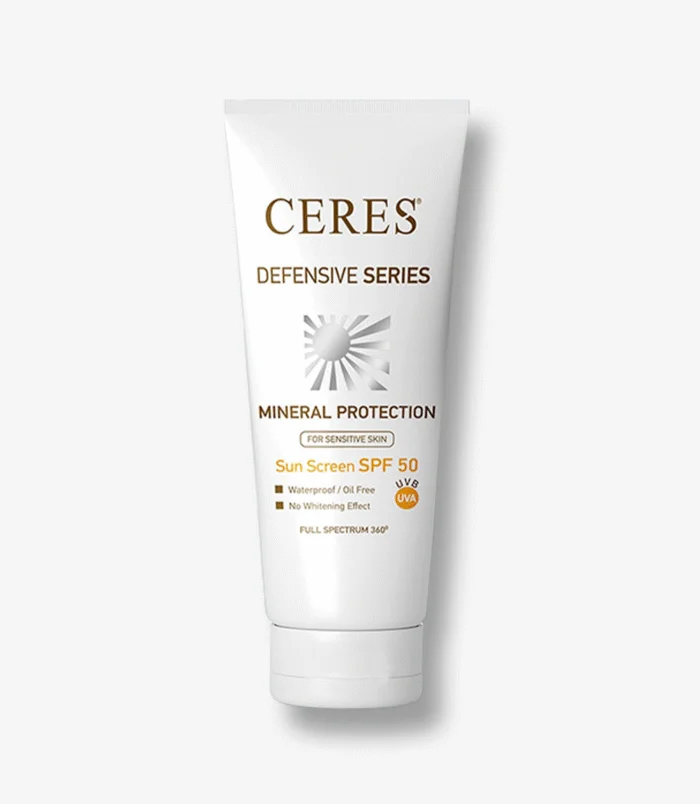
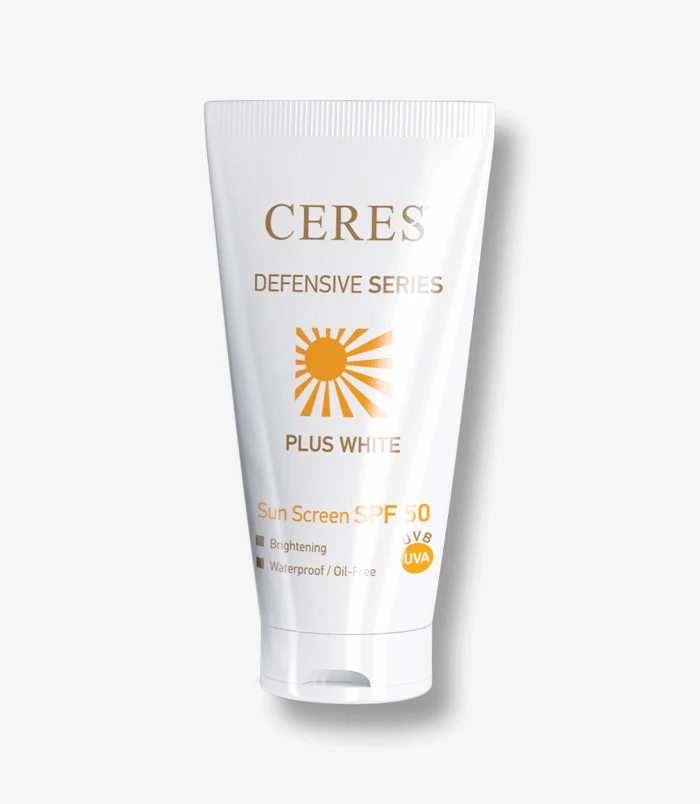
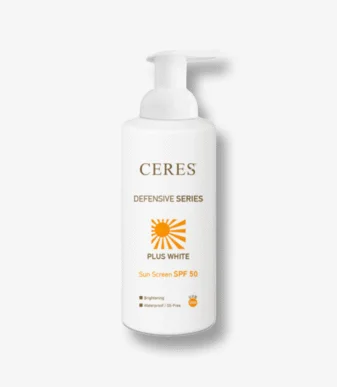
Here are the best option Available:
Does Sunscreen Block Vitamin D from the Sun?
Dr. Nadia Yousri: We get a lot of questions, and the common one, of course is wait a minute what about my vitamin D? If I use sunscreen, then I’m preventing vitamin D, yes?
That’s true if you want to make vitamin D in your skin, you need UVB rays for that. That said, no sunscreen is perfect; there is no such thing as a hundred percent and you don’t need it and it takes very little UVB to make vitamin D in the skin.
If we look at vitamin D levels in patients who use sunscreen, they usually have plenty of vitamin D production; it might not be true for somebody with darkly pigmented skin or for someone with whole body clothing covering every part due to whatever conditions that patient may have. So, you may want to have your levels tested if you have conditions pre-existing like chronic kidney or liver disease that may put you at higher risk for vitamin D deficiency.
That said, we can also obtain vitamin D from food. That no UV exposure is safe, and that we should get our vitamin D through our diet or take a supplement. That’s what I do.
Do you have more ideas for protecting skin from the sun?
Dr. Nadia Yousri: Don’t apply just one layer of sunscreen and expect to be protected all day. If you are spending time on the water or sweating through your trail run, every hour is good, otherwise every two hours should do. Then for the best way to protect your skin from the sun, I would recommend staying in the shade or wearing clothing that offers an ultraviolet protection factor (UPF) of 50+.
Instead of applying with the logic of “a little goes a long way” (which is often true) or starting small to build up coverage, think thin to thick if you’re trying to fit sunscreen spf 50 into your routine. So the thinnest sorts of products, such as serums or lightweight moisturizers, would go on your skin first. I’m the last person you’d like to put on some organic sunscreen, I know.
Do not forget the parts of your body most commonly missed with application — your ears, your neck and the backs of your hands — because we see high rates of skin cancers in those areas.
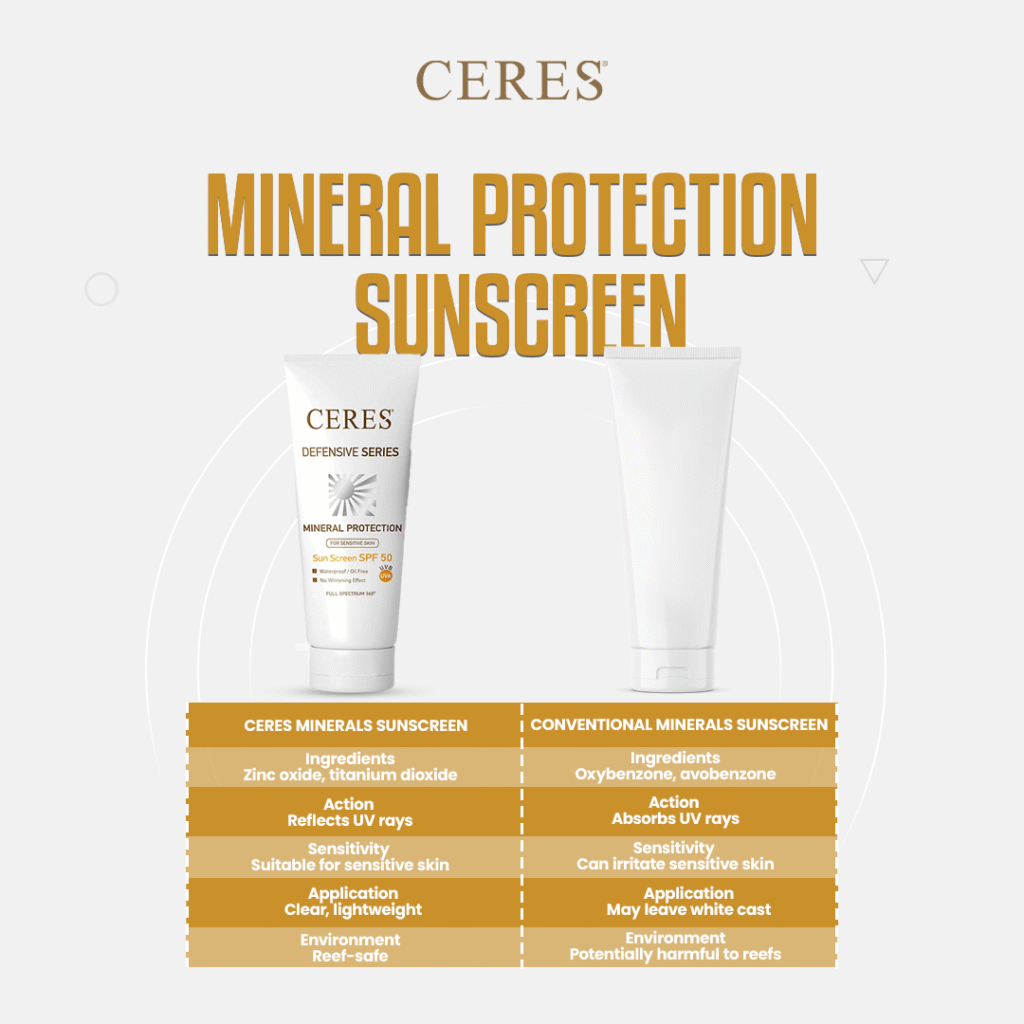
Natural vs. Conventional Sunscreen
There are natural sun screen options as well, which will usually contain ingredients such as zinc oxide or titanium dioxide. These ingredients rest on the surface of the skin and reflect U.V. rays, rather than being absorbed into the bloodstream. For those who want chemical-free skin care, organic sun cream is your other option. Not only are they shielding your skin, they’re also limiting synthetic chemical exposure.
Choosing the Right SPF
Here are two excellent options that are perfectly suited for you: Ceres Derma sunscreen.
Minerals Sunscreen spf 50
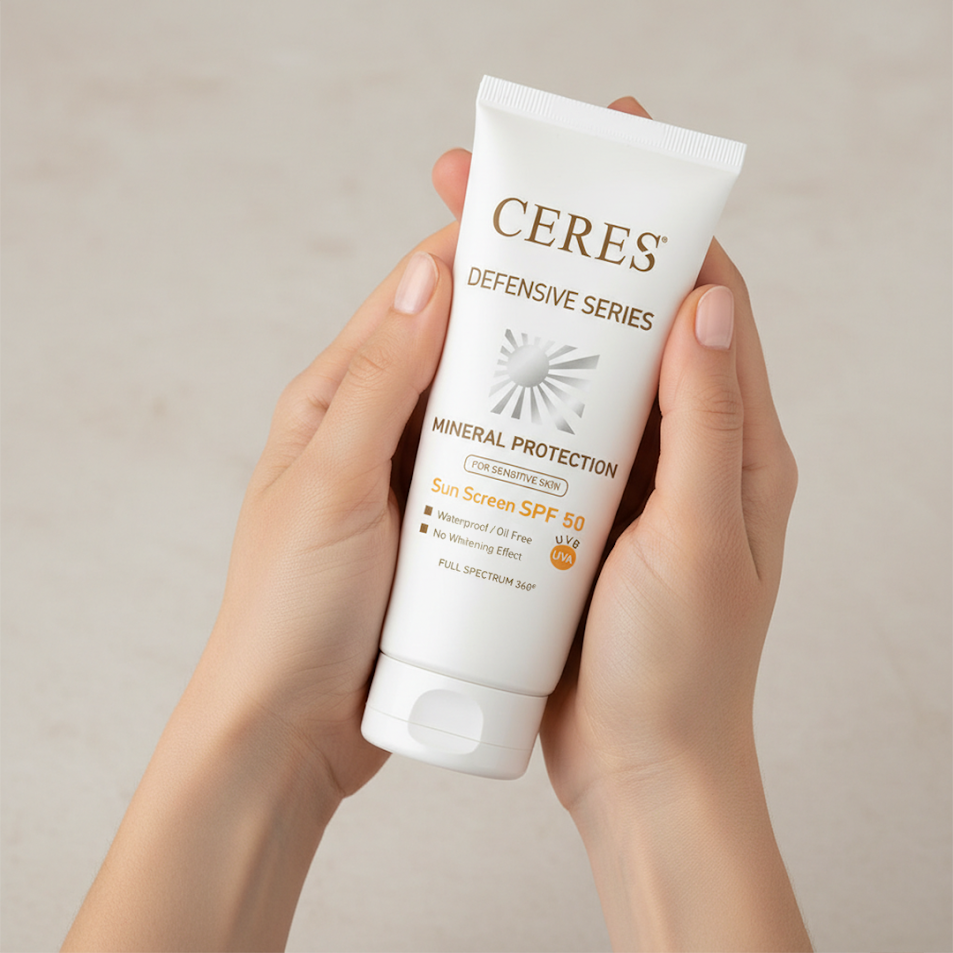
Why this is best for you:
Ceres Derma Mineral SPF 50 will keep your skin safe. This formula with zinc oxide heals dark spots and works well on sensitive skin without leaving a greasy finish.
- Broad-Spectrum SPF 50: Protects against UVA and UVB rays right away.
- Makes skin brighter: works to get rid of dark spots and hyperpigmentation.
- Deeply moisturizing: made with niacinamide and shea butter.
- No White Cast: Light, absorbs quickly, and works well with makeup.
- Safe for Sensitive Skin: Not irritating, gentle, and free of chemicals.
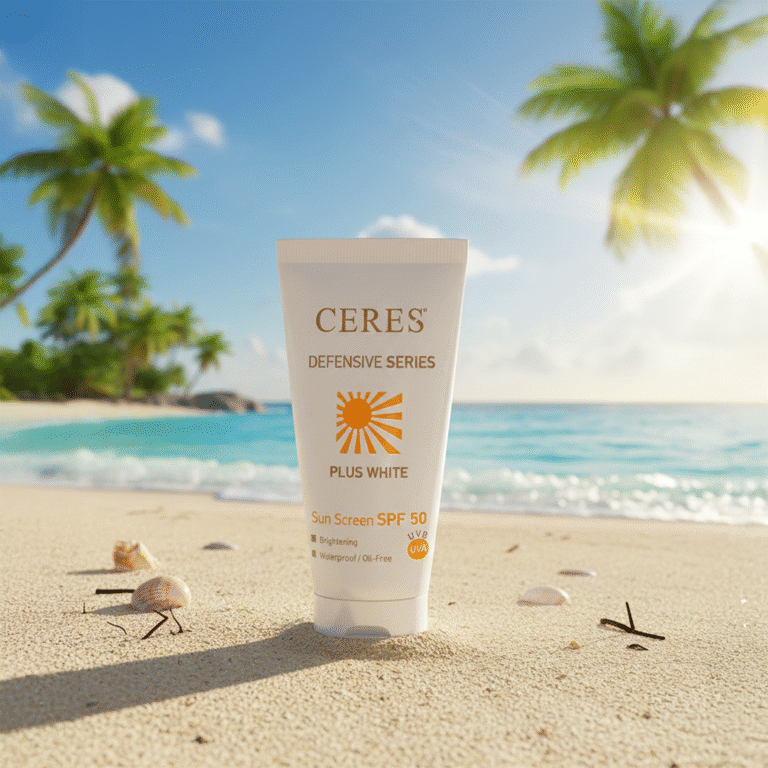
Plus White Sunscreen
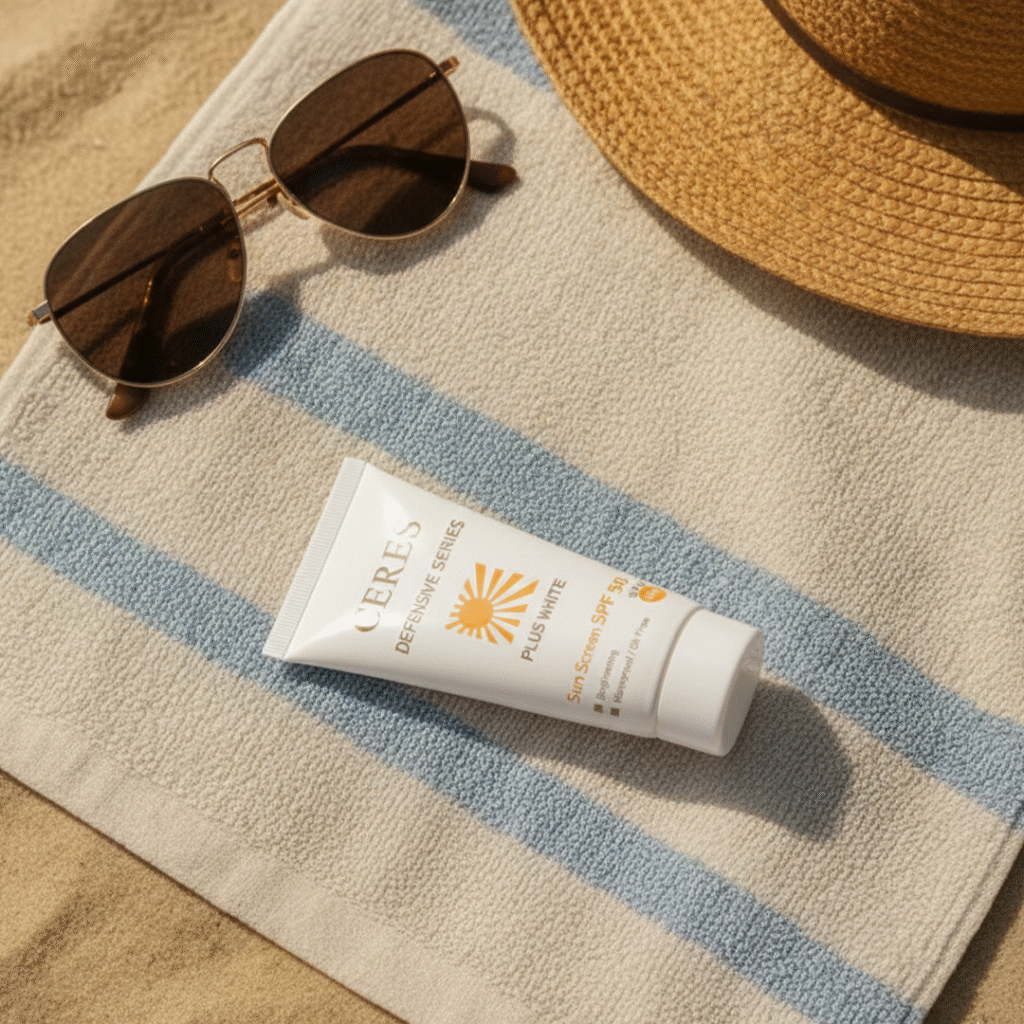
Why this is best for you:
Burn the sun with Ceres Derma Plus White SPF 50. This combination of hyaluronic acid and vitamin C battle aging while adding a gorgeous shine.
- Dual Function: High SPF 50 Protection & Whitening Vitamin C.
- Moist Moisturizing: The water supply is maintained by hyaluronic acid and gives a dandy look.
- Anti-Aging Protection: It helps stop dark spots, sunburn and premature wrinkles.
- Light and Matte: This oil-free product serves as a good, fragrance free, canvas before applying makeup.
- Pore-Fectional: Formulated to not clog pores, ideal for all skin types.