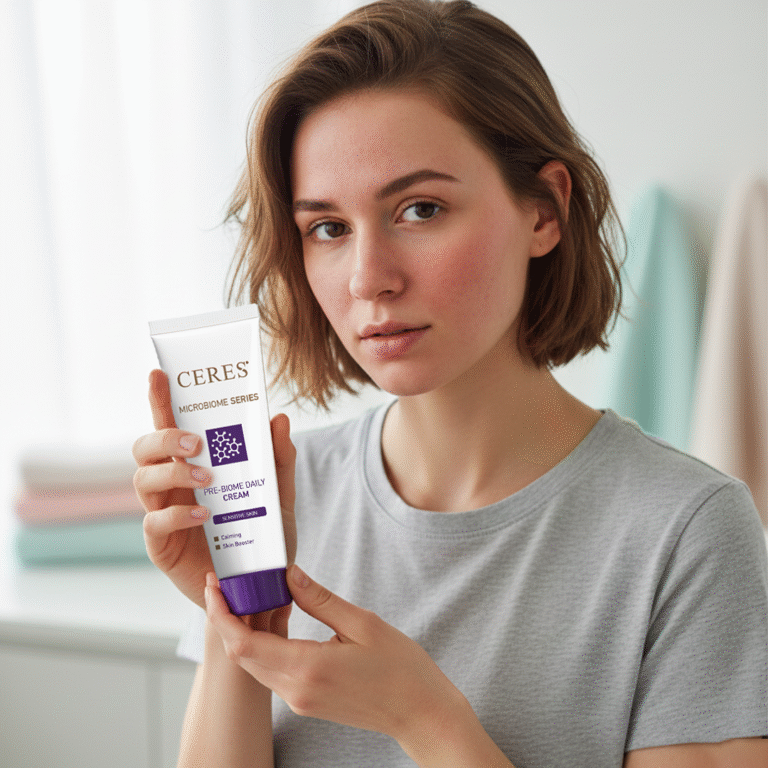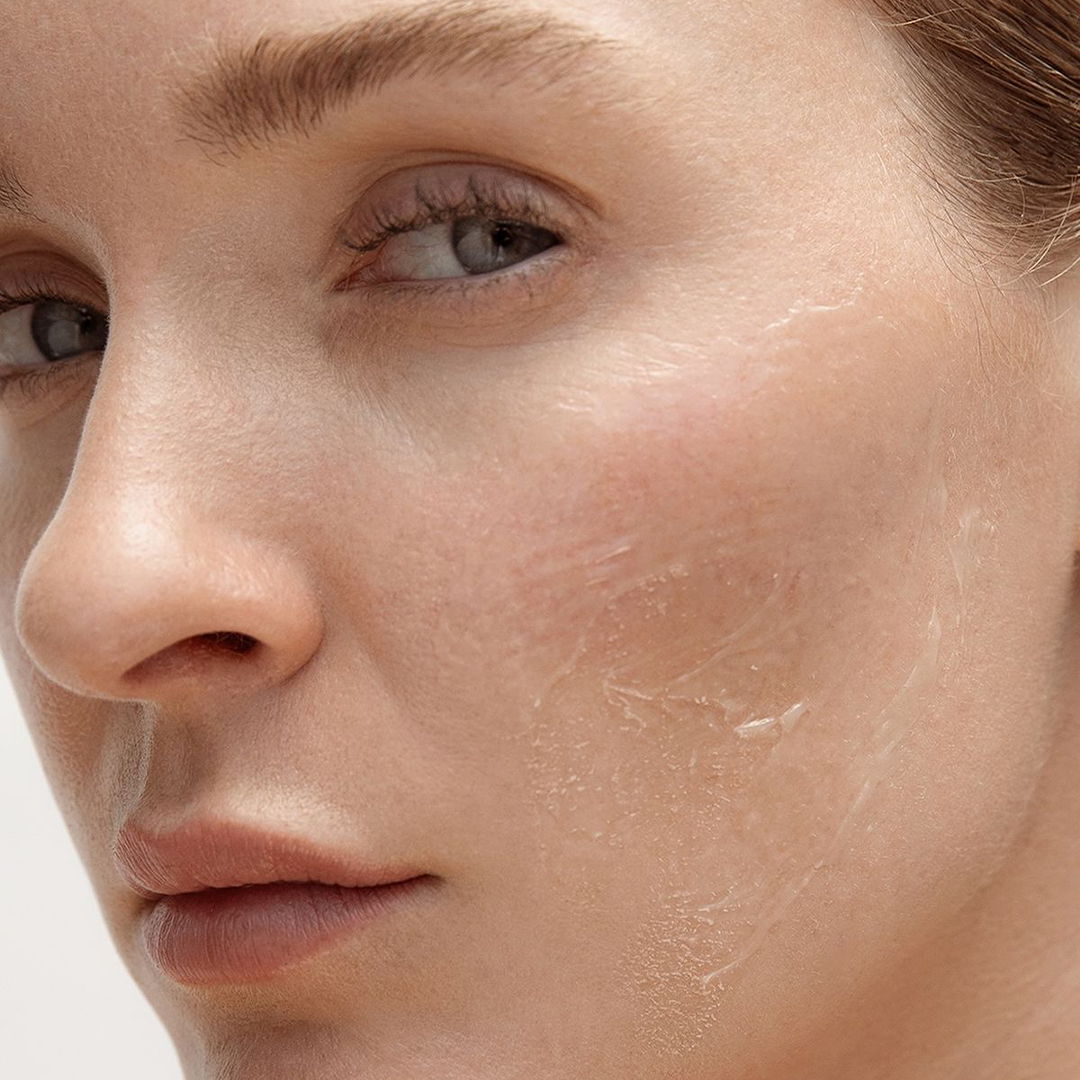
The reality is, it’s more than annoying to have to face a dry, tight feeling on your complexion. It can knock your confidence. You may see patches on your forehead or rogue flakes on your chin that no makeup will stick to. As someone who’s had conversations with countless patients about this, I can tell you that it is extremely common and more important, once you know what’s going on, it’s something that can be very successfully managed. If you’re struggling with dry, flaky skin on your face, it’s important to know the cause so you can better treat and manage your complexion.
Are You Stripping Your Natural Oils During Your Day-to-Day?
It’s also the number one cause of dry facial skin in people who walk into my clinic. That squeaky-clean feeling? It’s actually a bad sign. Many of the most popular cleansers, soaps, and even hot water can function as overzealous cleaners that strip off these oils and lipids, often leaving your skin barrier exposed and dehydrated.
Dermatologist Tip: Replace with a mild, creamy, fragrance-free cleanser. Seek out words like “hydrating”. Ceres Dermatologist Approve hydrating cleansing foam like Brightening cleansing for all types of skin include the essential ingredient
- Oat Amino Acid: Soothes and hydrates dry, sensitive skin.
- Algae Complex: Nourishes and protects skin with antioxidants.
- Sodium PCA: Retains moisture, keeping skin soft and hydrated
Apply gently on your face and rinse with lukewarm water, never hot, and pat your skin dry gently. And to care for it more like a fine silk shirt than a pot to scrub.
Is the Weather Making Off With Your Moisture?
We blame winter most of the time when we encounter dry, flaky skin on our face, and we are right to do so. Dry, cool outdoor air and dry, heated indoor air combine to strip moisture from your skin. But don’t forget summer! Air conditioning draws moisture out of the air and your skin, and sun exposure can silently impair the skin’s surface, resulting in dryness and peeling.
Dermatologists say. Keep a humidifier going in your bedroom, particularly when you sleep. And yes, a solid moisturizer is nonnegotiable all year round it’s that seal in which the water inside your skin lives.
Could You Be Overusing Harsh Products?
Sometimes, the things we use to try to “fix” our skin are what’s actually making it worse. Harsher acne treatments (think: salicylic acid or benzoyl peroxide), physical scrubs, and alcohol-based toners can be too harsh. They can strip the skin’s protective barrier and cause it to feel vulnerable, upset, and yes, flakey too.
Dermatologist’s Tip: If you are using active acne or anti-aging ingredients, ease in. Use every other night, not nightly, and always follow with a rich moisturizer. Ditch the gritty scrubs. If you’re getting dry skin on your chin or forehead where you apply treatments, cut back and let that barrier repair.
Are You Neglecting the Moisturize Part of Your ‘Skin Care’?
So basic, yet many of us fail to moisturize properly (especially if there are oily parts). Or, they grab lotion that isn’t rich enough for their skin. When the skin is dry due to lack of water, and it becomes insipid (a great word I learned recently), a thick, moisturizing cream won’t do much for your skin because the absence of those active ingredients that your skin, like
- Vitamin C: A powerful antioxidant.
- Niacinamide (Vitamin B3): The skin barrier booster.
- Hyaluronic Acid: Deeply hydrates the skin.
- Arbutin: A natural skin brightener
The good news is that Ceres Derma Brightening Cream is perfect for all skin types.
Dermatologist’s Tip: Moisturize damp skin once you have patted your face dry after washing. This locks in that water. For extremely dry facial skin, you’ll want ingredients such as hyaluronic acid (which holds onto water), vitamin C (to repair the barrier), and Arbutin: A natural skin brightener and the ceres derma approved the dermatologist.
How to treat dry skin on the face
When you have dry facial skin, the way to resist is to adopt a mild skincare routine that can add and retain the moisture in your skin. Reach for a hydrating formula and avoid anything that will strip your skin of moisture. This is how to properly address dry skin, including dry skin on the chin. Dry skin on forehead: use gentle, hydrating products and avoid harsh cleansers that can further dry out your skin.
- Be gentle when cleaning: Do not use abrasive soaps that remove natural oils.
- Hydrate regularly: Select hydrating formulas that contain hyaluronic acid or ceramides.
- Protect your skin: Cover up exposed skin on your face with sunscreen from cold, wind, and UV rays.
- Skip hot showers: Hot water can exacerbate your dry skin; use lukewarm instead.
- Be consistent: Just keep using a basic skin care routine to help keep your face looking smooth and hydrated.
Conclusion
This dry fight is an issue of discipline and lots of love. Treat it tenderly, shield it, and be kind to it day by day. Just pay attention to signs like your tightness and flakiness; they’re there to communicate that your skin would prefer a gentler approach. Stick with these shifts for a few weeks, and you may experience a silkier, more comfortable difference. If you have particularly dry skin or your regular moisture routine isn’t fixing the problem, visit a dermatologist.